
Sardinia Bay Golf & Wildlife Estate has added a 19th hole with a difference and it is paying handsome dividends.
While tradition would have the 19th in the clubhouse overlooking, say, the first, the Gqeberha lifestyle property found a more practical spot for theirs.
The installation of a new borehole in December to replace the disused one has not only perked up the course, it also benefits the indigenous vegetation scattered all around the property.
Furthermore, the specially-constructed dams serving as watering spots for a whole ecosystem of animals are also brimming with fullness.
The collapse of the original shaft, drilled well before the estate came into being, required a proactive response and the result speaks for itself.
According to course steward and resident Stephen Daly, the old, crumbling infrastructure dated back to the times when Sards was still sprawling farmland.
The club used water from it, as well as grey water from the onsite treatment plant, to keep the greens and tee boxes in good nick.
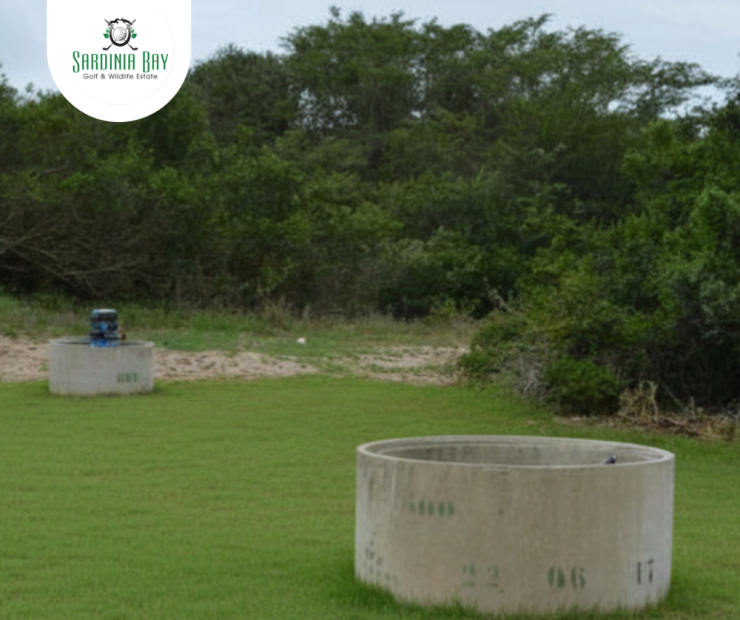
Life became tricky when it was retired in November, especially as the province was already battling a dry spell. The surplus grey water was simply not sufficient for irrigation purposes.
Stephen says it required action to be taken as “throwing up our hands” was not an option.
Everyone on the estate was consulted and it was agreed to implement a special levy to fund the new, improved borehole.
Once the financial target had been reached, drilling work began in earnest and the “19th” went online on Christmas Eve.
This water source is far superior to its predecessor. It is drilled to a depth of 150m, which is six times deeper than the original.
It also boasts solid casing and infrastructural elements that give it every chance of reaching its full lifespan, estimated at 25 to 30 years.
“The yield is very good, about 12 000 litres an hour. It benefits the whole estate and golf club,” Stephen says.
“We’ve got a lot more water available all the time now. We have [flora] that needs to be watered and it feeds the dams where the animals drink.”
It has also been a major coup for the course, which is looking a picture after the recent rains.
Contact me please
In the event of another dry spell, proceeds from the borehole will ensure it remains easy on the eye – not just the tee boxes and greens like in the past, but so too the fairways.
“The course is in a good position at the moment. Rounds are up so it’s very positive,” Stephen says.
“You build a club brick by brick and it (borehole) kind of goes with the growing of the club. It’s always a work in progress.”
Water from the borehole is not suitable for household use since its location close to the Indian Ocean means it is quite saline.
Piping this water into homes without proper filtering can literally “wreck your appliances”, Stephen points out.
He adds that there is a great deal of legislation around the use of borehole water.
“You can’t just take out as much as you want, otherwise you deplete the aquifer.”
All boreholes need to be registered and consumption is monitored by the department of water affairs.
Stephen says even though there may be a lot of water in an individual aquifer, it eventually becomes depleted as more boreholes are drilled over time.